
Thank gene editing
SaveShare
March 4, 2026
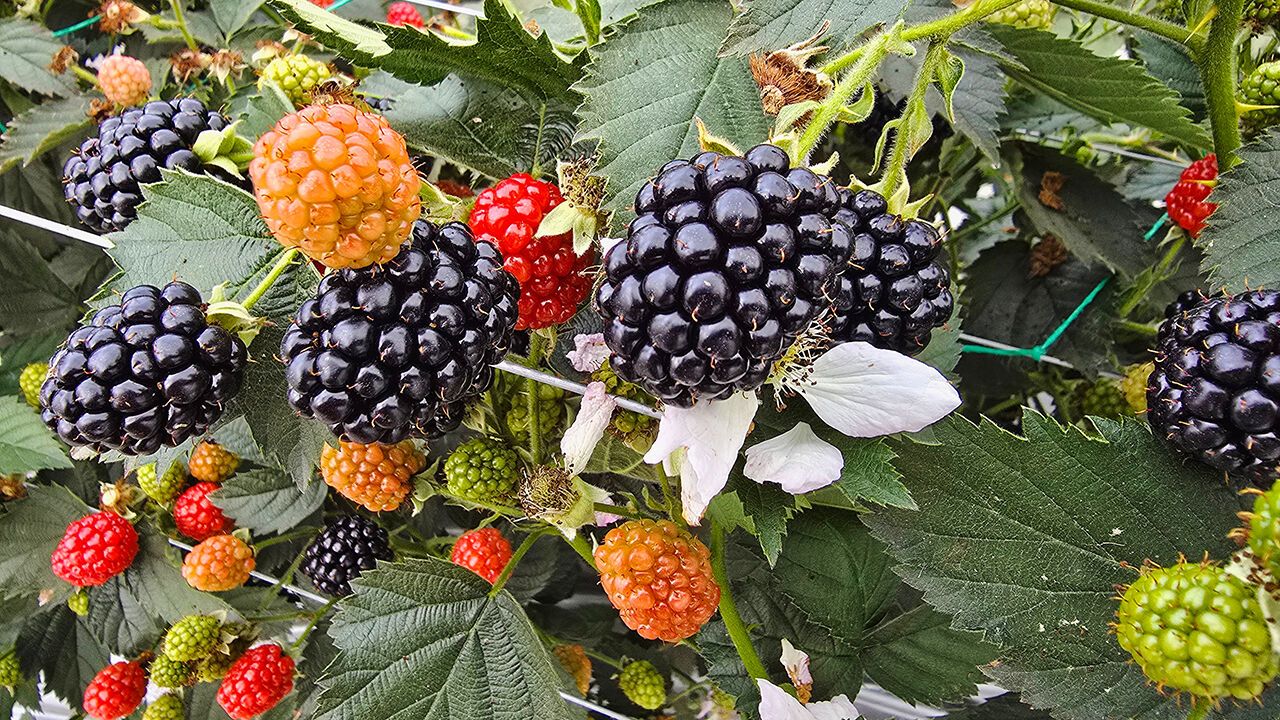
“YOU DON’T notice the seeds in a blackberry until you’ve tried a seedless one,” says Tom Adams, the boss of Pairwise, a biotech company in North Carolina that is working on the first iteration of such a fruit. Gene-edited blackberries are not technically without seeds. Rather, as with seedless grapes, those seeds are so small and soft as to be unnoticeable. Late last year Pairwise announced a joint venture with a fruit-breeding company to develop stoneless cherries, following the success of conventionally bred seedless grapes, watermelons and easy-peel mandarins. It is only a matter of time until more challenging fruits are similarly eviscerated.
Over thousands of years of domestication, humans have moulded fruit to their liking. Today’s peaches are 16 times the size of their ancient ancestors. The 1,200 varieties of watermelon bear little resemblance to the pale and pip-filled gourd that preceded them. Cultivated fruits also tend to be sweeter. (So much so that some zoos have stopped feeding them to animals.) Some modern fruits, however, achieve their sweetness by lowering acidity and bitterness rather than piling in extra sugar.
As Pairwise’s blackberries and cherries show, advances in gene editing are allowing fruits to be altered in new ways. CRISPR, the most popular such technique at the moment, and the one employed by Pairwise, permits the deletion of single genes. That enables changes which would be hard to achieve through conventional breeding. Moreover, unlike existing genetically modified crops, those made usingCRISPR do not require DNA from a foreign organism to be inserted—a practice that experience shows puts customers off.
Artificial intelligence is helping scientists design fruit more efficiently. The predictive capabilities of computational modelling and machine learning allow them to discover more quickly how multiple genes and biochemical pathways, as well as environmental factors, will come together to produce more complex traits, such as the chemicals that generate flavour. They can make fruits more appealing in other ways, too. For instance, GreenVenus, a Californian firm, is using CRISPR to develop non-browning avocados by obstructing an enzyme called polyphenol oxidase. Scientists have also developed mushrooms and potatoes that oxidise more slowly.
So far, few CRISPR-edited fruits have hit the market, because of the time it takes to develop a new generation of fruits from an altered seed, says Ma Hong, a professor of biology at Penn State University in America. It can take several years for apple or peach trees to begin bearing fruit. As a result, the technology is most advanced for tomatoes and strawberries, crops in which the process takes only a few months. In 2021 a Japanese tomato with a higher content of gamma-aminobutyric acid (GABA), a beneficial nutrient, was the first CRISPR food to go on sale. In 2024 scientists in China used the same technology to make tomatoes up to 30% sweeter by disabling genes that limit sugar production.
As more fruity creations go on sale, companies believe that more people will eat fruit. Americans have taken a particular liking to berries: according to the USDA Economic Research Service, fresh blueberry imports grew ten-fold between 2000 and 2020. Pairwise estimates that the introduction of its seedless blackberries and stoneless cherries could have a similar effect to seedless easy-peel mandarins, which increased the value of the entire citrus market in America by roughly a third in the four years from 2012, when the fruit became available to consumers year-round.
Clearer regulation will help even more. In 2016 Argentina was the first country to rule that gene-edited products should be regulated in the same manner as conventionally bred ones, and many others have taken similar approaches. The European Union’s Parliament and Council, the bloc’s governing body, reached a provisional deal in December to “simplify” the process for marketing plants bred through new genomic techniques, such as by scrapping the need to label them any differently from conventional ones. That seems an appropriately fruitful approach.